

Three diagrams to enjoy
As seen in the OMA exhibition at Fondazione Prada

In early June I saw someone I follow on are.na posted a block about an exhibition about diagrams in Venice, Italy. It was immediately added to my research channel, and because I had to travel to Europe for the roller derby world cup, I knew there was a big chance I could make it into the exhibition. The world cup took place in Innsbruck, Austria and there are no direct flights to it, so you are forced to get in and out of it through any of the major cities surrounding it: Zurich (3.5hrs train), Munich (2h train), Milan (5hrs train) or Venice (5hrs train). It was the perfect opportunity and I had to do my best to get there, eventually everything aligned for me to go after the tournament and I was able to satisfy my years long deep interest a.k.a. obsession with diagrams in a real life exhibition.
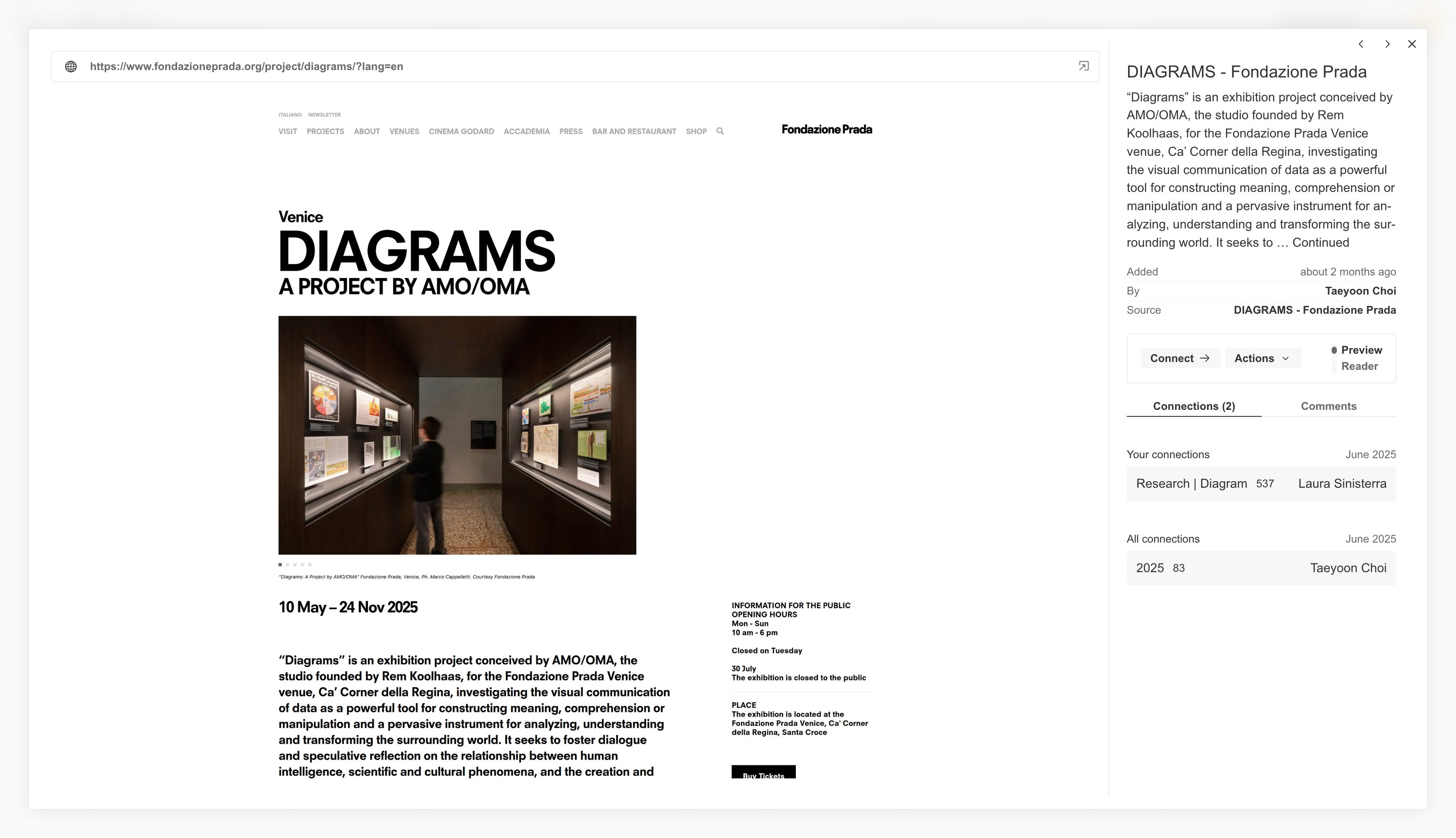
It was also really cool that the exhibit aligned with my background in architecture, as OMA is one of the biggest firms in architecture, led by Rem Koolhas, and AMO is their twin equally interesting and deep design research studio about architectural thinking. In the past, OMA/AMO has had exhibitions about their research at the Guggenheim about Countryside as a concept for the future; designed spaces for Miu Miu, Dior and Prada fashion shows; and created fascinating architectural buildings and concepts around the world, one of my favorites is in Casa Wabi in Mexico, which by the way has also an incredible building by my favorite architect Tadao Ando. Another place I must visit eventually.
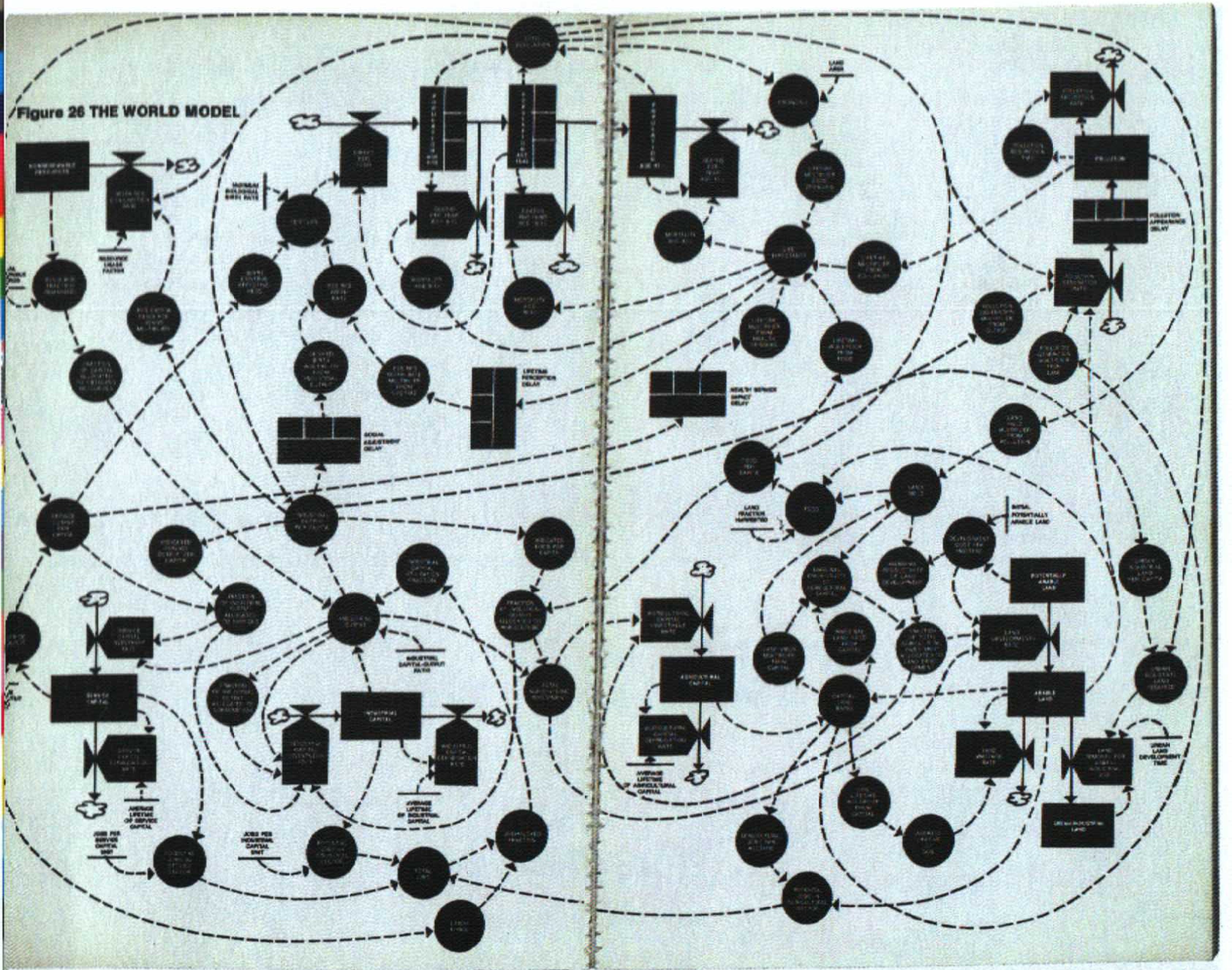
1 - Modello del Mondo, 1972
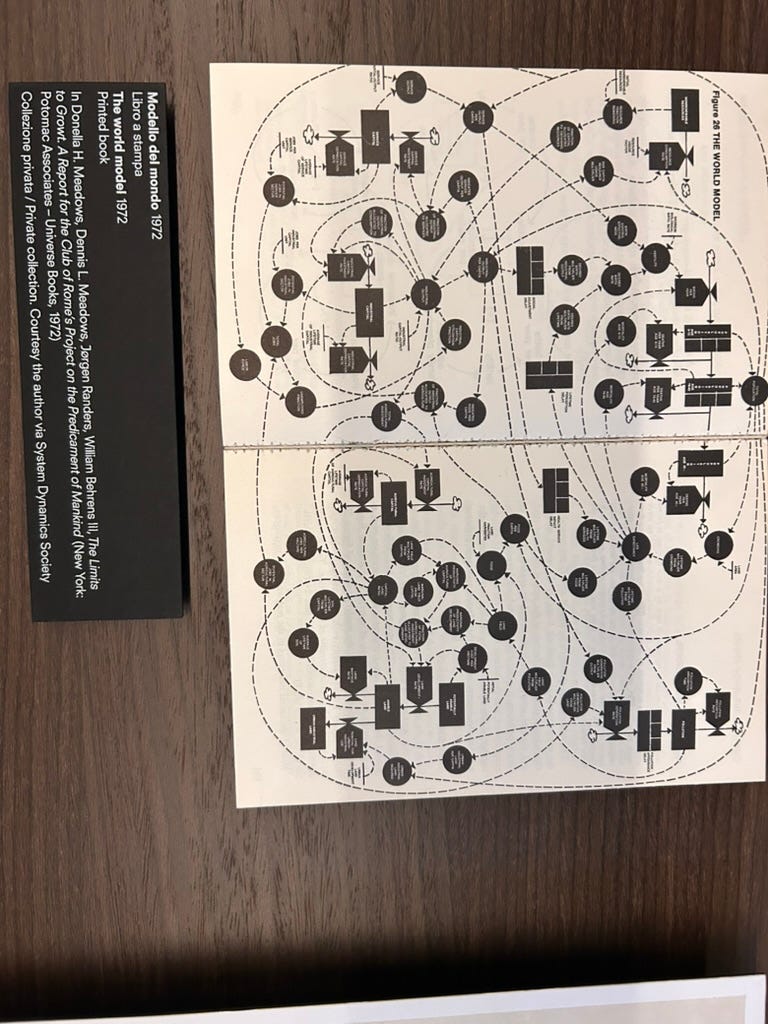
One of the best things about this exhibition is that they prioritized presenting originals over copies, so it is a huge privilege to be able to see in person some iconic (to me) diagrams that come from private collections, like this one, that exist in my channel but in a very low resolution. Another really good thing about the exhibition is that they published a book with all the diagrams, taking into account people like me that enjoy physical objects and don’t take really good phone pictures, so I acquired a wand scan so I can go through all the pages and create a new channel for them.
2 - All the W.E.B. Du Bois diagrams, 1900
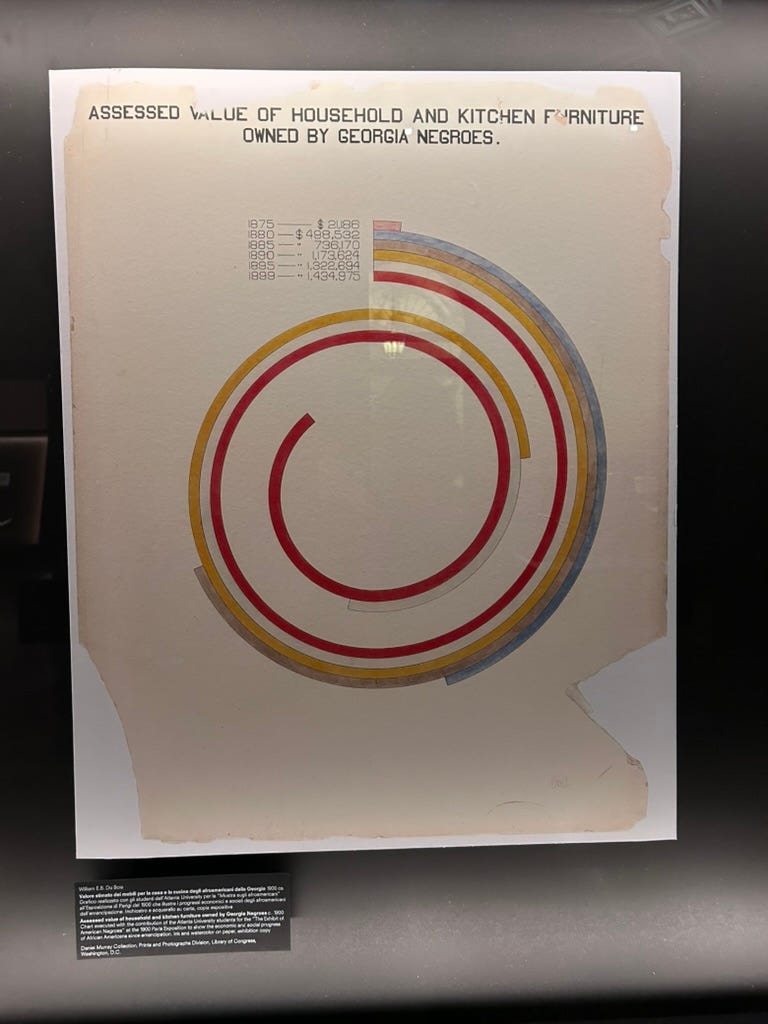
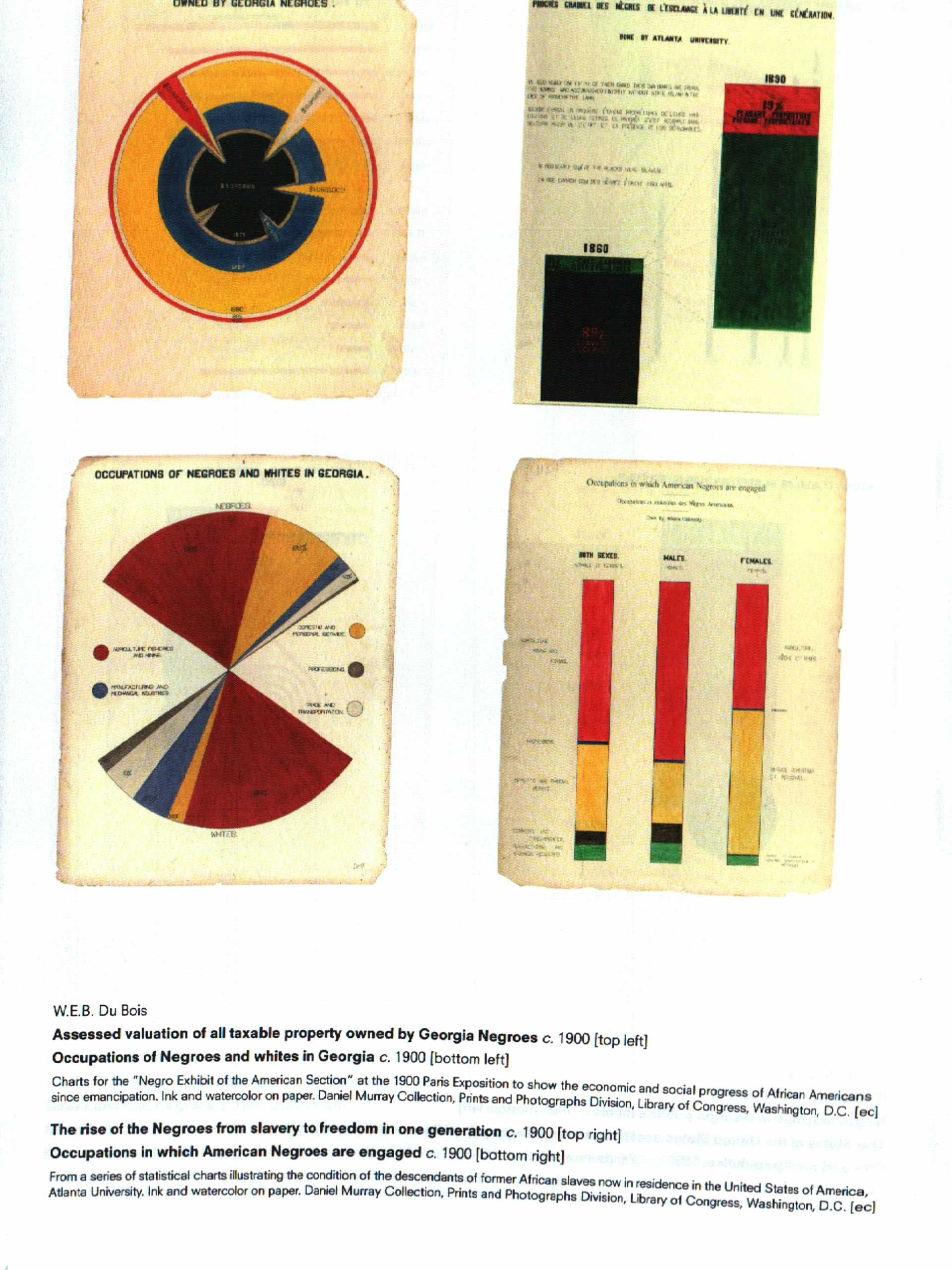
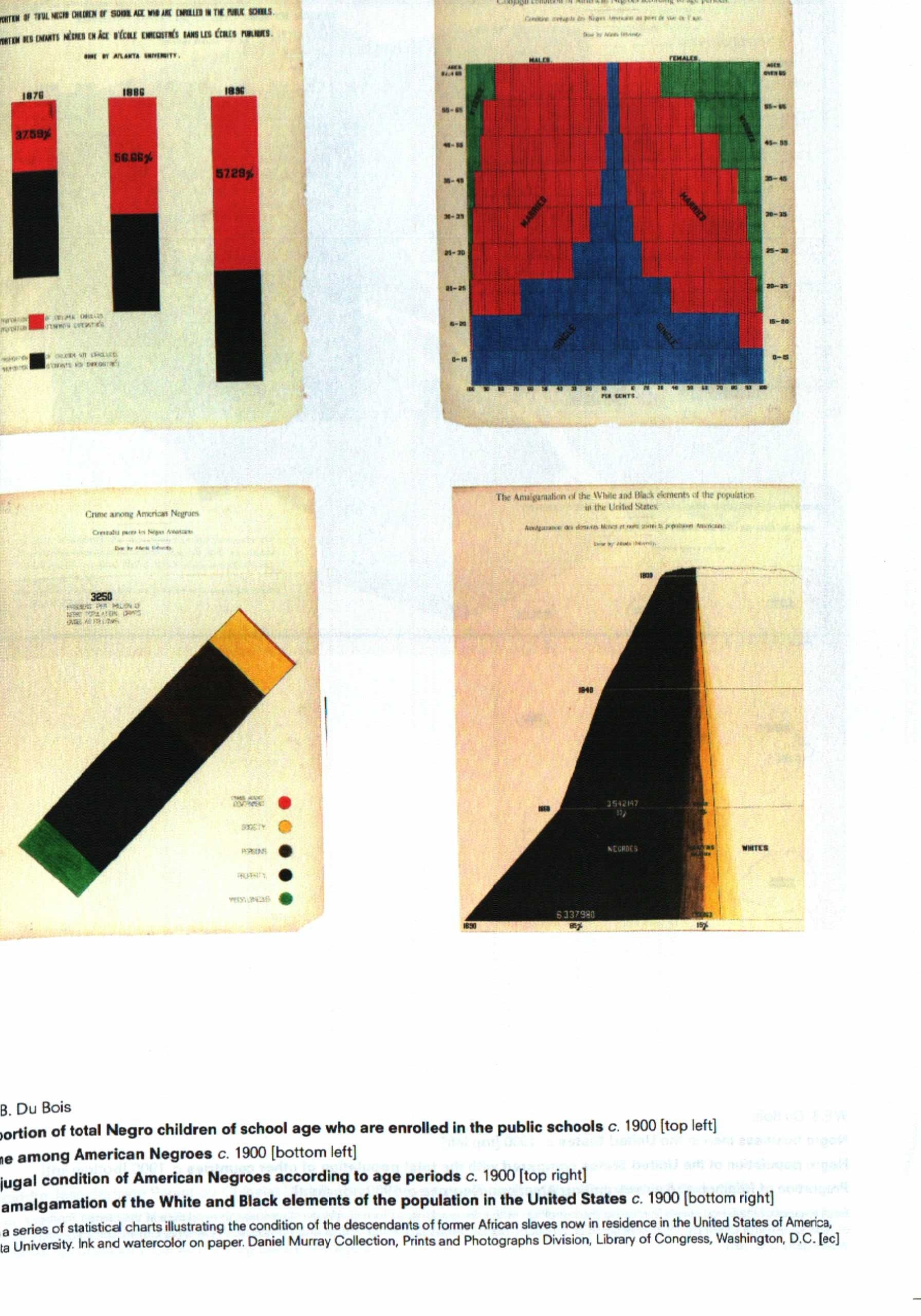
There was a big section of the diagrams made by the American sociologist and activist William E.B. Dubois that were very impressive not only for their historical importance but the technical quality, clarity in the design and how well crafted they were. Both my pictures and the scans do not do justice to how beautiful these were. These were made for the 1900 Universal Paris Exhibition, which was also the second exhibition to have the Eiffel tower, to commemorate and showcase the achievements of African Americans after the abolition of slavery.
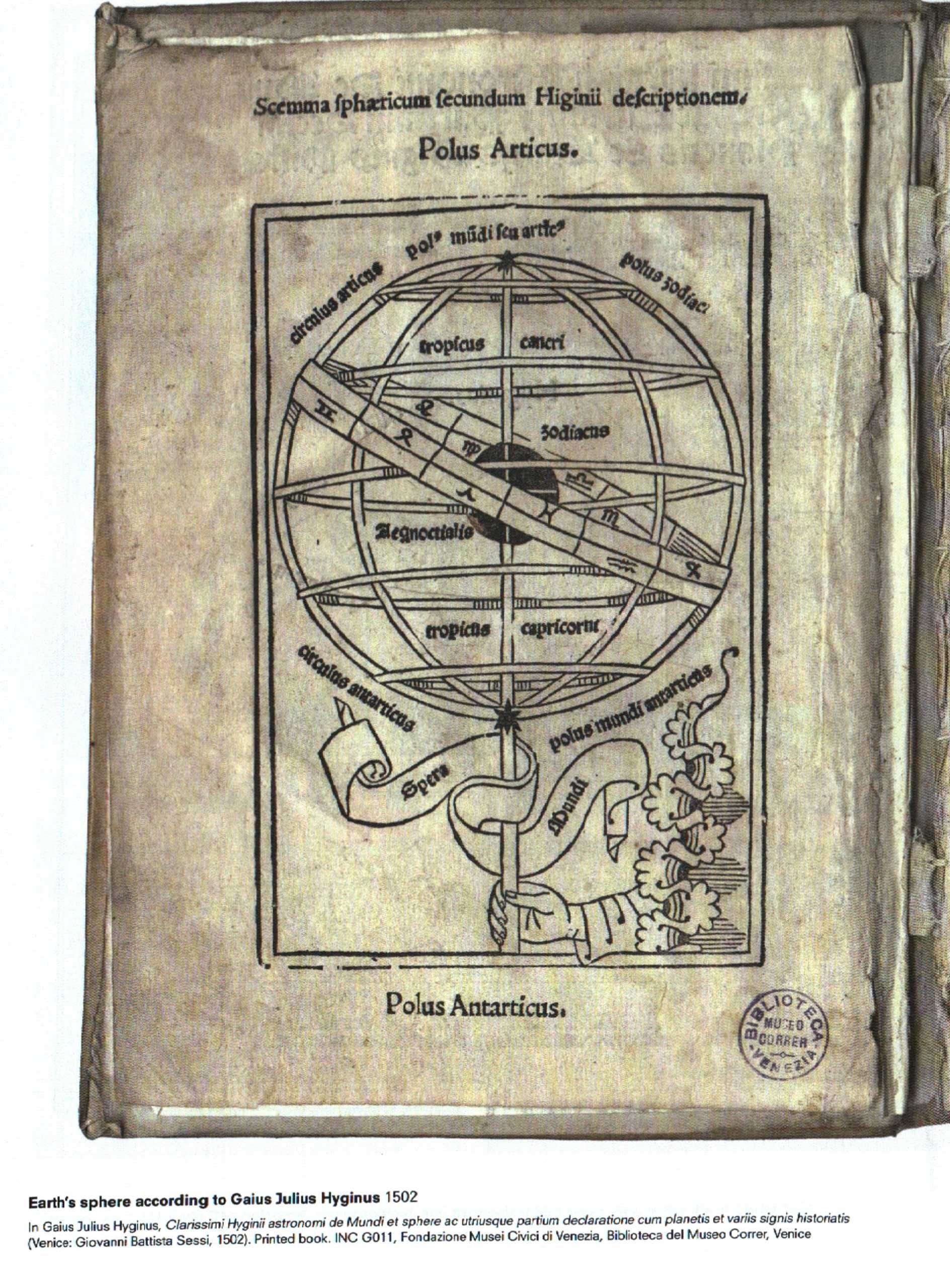
3 - Earth’s sphere according to Gaius Julius Hyginus, 1502
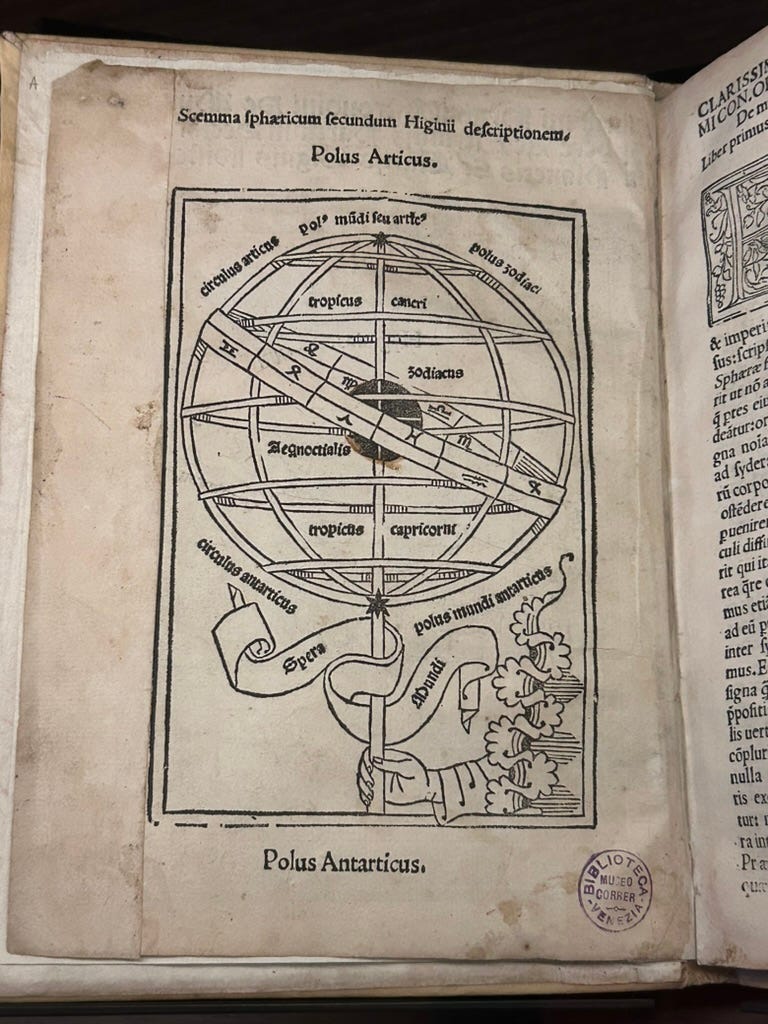
I’m a big fan of the old depictions of earth, from a time without gps, just observations, stars and intuitions. Some ended up being correct, some that ended up being extremely funny and inventive. This was another section that I enjoyed, the astronomy maps are a delight and seeing them from up close in these books that are probably not available for public consult is just marvelous. Some of them even had inserts and interactivity, and the fact that these have been preserved for 500 years, just impressive work from humankind.
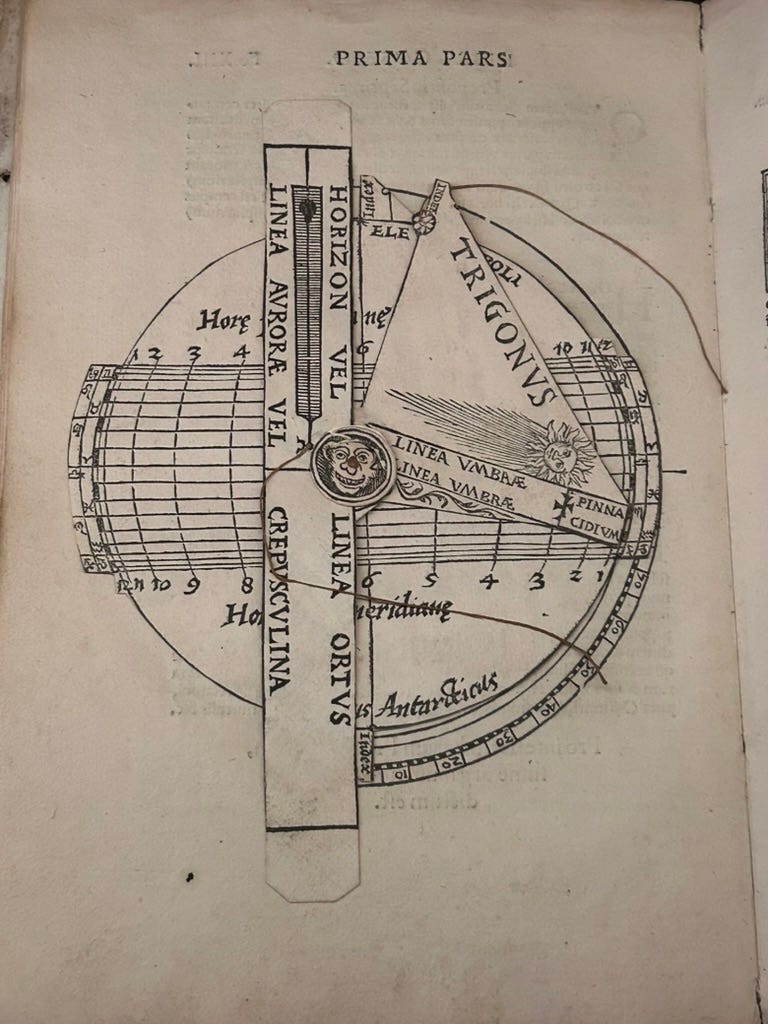
I just created an are.na channel with some of the scans I shared here and some other that I was considering adding but didn’t made it into this first selection. Will continue to add to it over time. For some reason I’m enjoying the not-so-good quality of these scans, there’s something very cool about it, seems to me that the added texture is worth keeping for some reason I can’t quite understand.
As usual, leave me your thoughts, ideas, recommendations, let me know if there’s anything else you’re interested in knowing about the exhibition. Hope you enjoyed and thanks for reading.
— k